
South Jr. High School
A schedule change. Lower school-day radon.
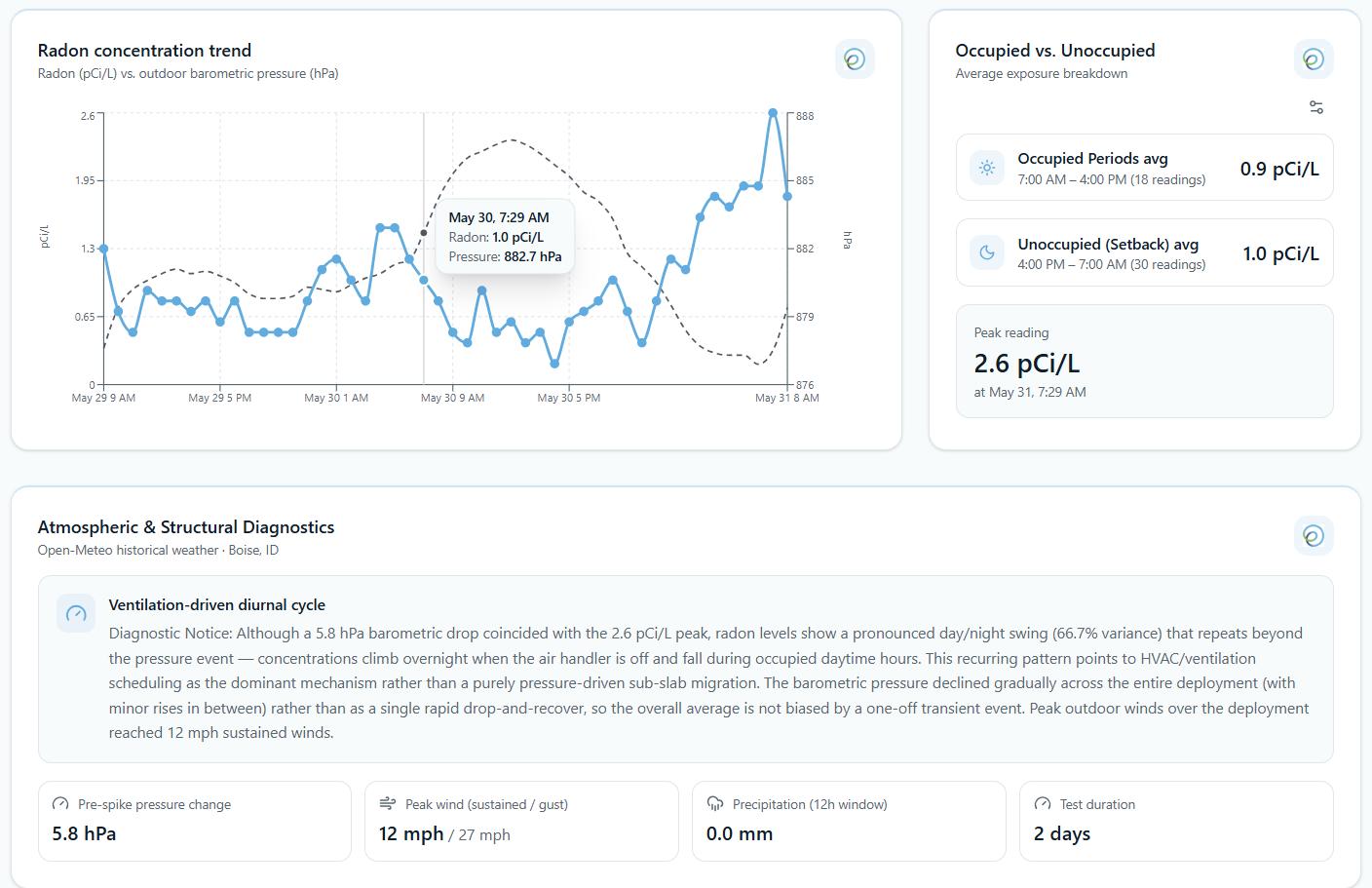
At South Jr. High’s Psych Office 28, Boise Schools adjusted the HVAC schedule after continuous monitoring revealed a ventilation-driven radon pattern. Follow-up monitoring recorded an occupied-hours average of just 0.9 pCi/L.
Measure the hours that matter
The follow-up occupied period was 7:00 AM–4:00 PM. Overnight setback averaged 1.0 pCi/L.
Use hourly data to guide HVAC scheduling
The dashboard identified a repeating ventilation-driven cycle, helping the district evaluate changes to its existing HVAC operation.
Plan ventilation before students arrive
The standard-weekend analysis recommended a 6:33 AM Monday startup and an estimated 1 hour 27 minute flush to reach the 4.0 pCi/L target by 8:00 AM.
Source: Dallas Jones’s 2026 symposium presentation, slides 5–8. The initial 5.5 pCi/L is an overall average; 0.9 pCi/L is the follow-up occupied-hours average. Startup timing is a dashboard recommendation. Results are specific to this room.
See what continuous monitoring could do for your district.
Tell us how many schools you have. We’ll build a Lease & Move plan around them.
Get District Quote